What actually kills after a Komodo dragon bite?
For decades the Komodo dragon's bite was blamed on bacteria. In 2009 researchers found venom instead.
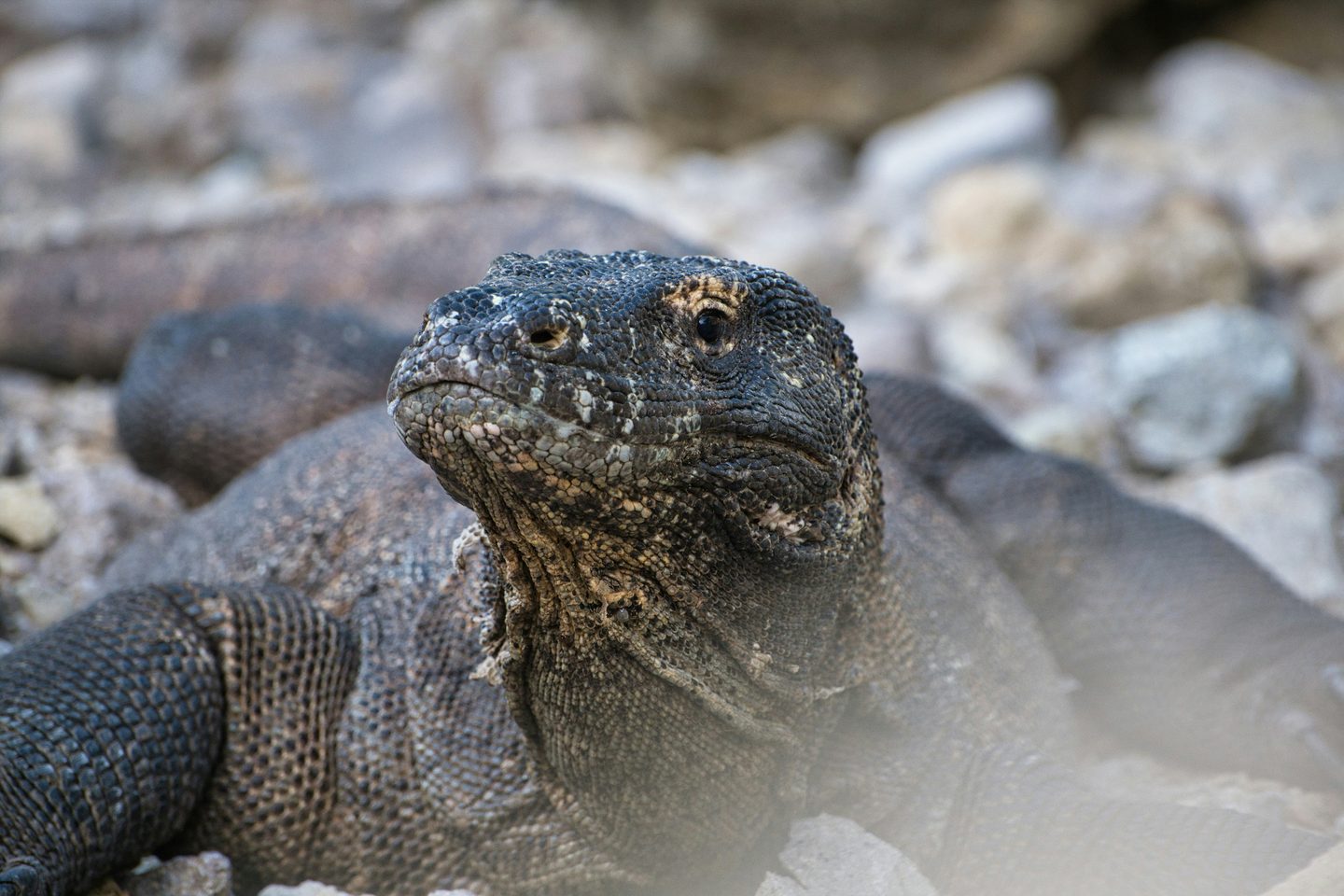
On the Indonesian island of Komodo, a dragon sinks its teeth into a water buffalo many times its size. The wounded buffalo limps away as the dragon looks on, bacteria-laden drool dangling from its jaw. The water buffalo weakens and stumbles days later. That's when the Komodo dragons emerge and devour it.
It was previously theorized by Walter Auffenberg that the Komodo dragon killed with bacteria. He and his family moved to Komodo for 11 months in the 1970s to study Komodo dragons and how they hunt. He observed the fight, the delay in the larger animal's death and proposed it was sepsis causing it. His theory explained a few unusual observations: the water buffalo would survive a fight only to later weaken. While it staggered along growing weaker the Komodo dragons would pursue it, but slowly and without urgency, a behavior consistent with awaiting infection. His theory has been held as fact for decades and repeated as one of those facts everyone just knows. Their drool was found to be filled with noxious bacteria.

In 2009 a multidisciplinary team led by researcher Bryan Fry published a paper that would rewrite this history. The team used an MRI and biochemistry to challenge this long-accepted fact. They found the dragons had venom glands in their lower jaw and a cocktail of toxins that has inspired a new decade of research. Their venom is secreted from a complex of ducts between their teeth, while their muscles and the act of biting squeezes it out and smears it into the bite. The toxins cause hypotension, anticoagulation and shock.

The mechanism is the same as the original septic bite theory, only newer research finds it's venom that drips out between their teeth. The end result is the same: the water buffalo weakens, its blood pressure drops, it goes into shock and stumbles, and that is when the Komodo dragons descend upon it.